
Rainfall during the monsoon season so far, from June 1 to September 13, has been 15 per cent below normal.

The India Meteorological Department (IMD) has predicted below-normal rainfall for India during the second half of the southwest monsoon season, specifically from August to September. This forecast indicates less than 94 per cent of the Long Period Average (LPA) for the period. While July saw good rainfall activity due to low-pressure systems and the Madden-Julian Oscillation, the Southern Peninsula experienced significantly low rainfall and record high minimum temperatures.

Water levels were even lower than the 10-year average in 27 reservoirs in eastern India and around 47 in southern India.

After a subdued start, the southwest monsoon has gathered pace since the beginning of July, narrowing the cumulative rainfall deficit from nearly 30 per cent on June 30 to around 15 per cent as of July 8.

India is likely to witness a mixed temperature pattern along with wetter-than-usual conditions in May, with the India Meteorological Department (IMD) indicating that rainfall across the country is "most likely to be above normal" at over 110 per cent of the long period average (LPA).

Change of guard in some states and evolving El Nino dynamics are triggering fresh actions on raging water-sharing disputes in several states.

The winters could be cooler in the plains due to the prevailing La Nina conditions though it does not have a direct relationship and also due to influence of the polar vortex.

The monthly average rainfall over India is expected to be below normal during July, the India Meteorological Department said on Tuesday in its monthly forecast.

The IMD is predicting close to a 60% probability of deficient rainfall, which means there is a strong possibility that the monsoon this year will be poor.

The India Meteorological Department (IMD) has predicted below normal monsoon rains for India this year, citing the potential emergence of El Nino conditions. This could significantly impact the country's agriculture-dependent economy.

'During the hot season (April to June), above-normal minimum temperatures are likely over most parts of the country, except in some regions of Maharashtra and Telangana, where minimum temperatures are expected to be normal to below normal,' IMD said.

The India Meteorological Department (IMD) forecasts above-normal rainfall for India in September, following a monsoon season marked by heavy downpours and related disasters in various regions. The forecast indicates normal to above-normal rainfall for most areas, with some exceptions in the northeast, east, extreme south peninsular India, and parts of northwest India.

The IMD said India did not experience any "break monsoon" conditions this year because of the large number of low-pressure systems.

The India Meteorological Department (IMD) has predicted above-normal rainfall for most parts of India during the post-monsoon season (October to December), except for some areas in the northwest. The southwest monsoon season ended with the country recording eight per cent above normal rainfall.

The record monsoon rains across India during the June to September months was 937.2 millimetres, the 5th-highest since 2001 and 38th-highest since 1901.

Intense heat swept through east India and parts of the southern peninsular region on Thursday, testing power grids and prompting the Kerala government to order closure of educational institutions till May 6.

The India Meteorological Department (IMD) has predicted above-normal rainfall across India in June, with most parts of the country likely to experience normal to below-normal maximum temperatures. The IMD also anticipates above-normal minimum temperatures across most of the country, except for some parts of central India and the adjoining south peninsula. The southwest monsoon reached Kerala on May 24, marking its earliest arrival over the Indian mainland since 2009. The monsoon is crucial for India's agriculture-dependent economy, providing vital water for crops and supporting drinking water and hydropower generation.

The early onset of the southwest monsoon brought continuous rainfall across southern and eastern India, contributing to this record.
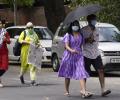
India is expected to experience hotter-than-usual temperatures from April to June, with more heatwave days in central and eastern India and the northwestern plains, the IMD said. Most parts of the country will see higher-than-normal maximum temperatures, except for some areas in western and eastern India where the temperatures are expected to be normal. Minimum temperatures will also be above normal in most regions. The IMD has warned that landslides could occur in parts of Kerala and Karnataka in the Western Ghats and that northeastern states might face flooding in April.

The country saw 645 events of heavy rainfall and 168 events of very heavy rainfall in November, the highest in the month in five years, the India meteorological department said on Wednesday.

India is likely to see above-normal maximum and minimum temperatures in most parts of the country in the March to May period, IMD director general Mrutyunjay Mohapatra said at a press conference.

'Peninsular Indians could ask 'Why should we contribute half of India's tax revenues if we account for only a quarter of the seats in the Lok Sabha?'.' 'The rest of the country seems likely to counter that 'democracy means one vote per person irrespective of where that person resides in India'.' 'With no easy answers to this thorny debate, the south's economic ascendancy could end up creating a Hobson's choice.' A revealing excerpt from Nandita Rajhansa and Saurabh Mukherjea's book, Behold the Leviathan: The Unusual Rise of Modern India.

Heatwave conditions are expected over northwest India during the next five days, with Punjab, Haryana, Rajasthan and Delhi predicted to bear the maximum impact, the India Meteorological Department (IMD) said on Thursday.

Brace for some warmth this winter as the India Meteorological Department (IMD) in its December-February forecast on Thursday said that the minimum and maximum temperatures could remain 'normal' to 'above normal' over most parts of Northwest and Northeast India. Both the minimum and maximum will remain below normal in Southern Peninsular and Central India in these winter months. While this could give some respite from the intense cold of North India, it could have a negative impact on the standing rabi crops if the temperature rise is unusual and abnormal.

An official statement said Modi chaired a meeting where he was briefed about the likelihood of above-normal maximum temperatures over most parts of the country during April-June, with high probability of such conditions in central western peninsular India.

Scores of people die every year due to cold waves that sweep across the north Indian plains.

Any long dry spell could cause moisture stress in the standing crop during the crucial maturing stage and also make it prone to pest and disease attacks.

Domestic automobile retail sales declined 4 per cent year-on-year in July amid drop in demand for passenger vehicles and two-wheelers, dealers' body FADA said on Thursday. Overall registrations dropped to 19,64,213 units last month, as compared to 20,52,759 units in July 2024.

Heatwave may abate over most parts of North India in next two days; temperatures likely to drop by 2-3C.

Rainfall in August is predicted to be below normal (less than 94 per cent of LPA), but the situation is expected to improve comparatively in September, the IMD said.

The southwest monsoon is set to make its exit in style, bringing rains to the parched parts of Uttar Pradesh and Bihar, as weather forecasters have picked up signs of formation of a cyclonic circulation over Bay of Bengal. Addressing a press conference in New Delhi, India Meteorological Department (IMD) director general Mrutyunjay Mohapatra on Thursday junked last week's forecast of early withdrawal of southwest monsoon and announced the extended stay of the seasonal showers. "Even though we expected early withdrawal of the southwest monsoon, a cyclonic circulation over west-central and adjoining northwest Bay of Bengal will shift the monsoon trough southwards around September 7.

Above-normal heatwave days are predicted in most parts of central, east and northwest India during this period.

The IMD said that rainfall over India in August and September would be around 106 percent of the long-period average of 422.8 mm.
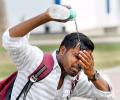
Heatwave conditions have been prevailing in Odisha since April 15 and the Gangetic West Bengal since April 17, according to the MeT department.

Nana Jagannath Shankerseth is one of the greats who made Bombay India's foremost city.

>Bihar (18 days) has the most number of heatwave days in 2023, followed by Andhra Pradesh (15 days), Odisha (15 days), Jharkhand (13 days), West Bengal (8 days) and Tamil Nadu (6 days).

Heavy rain in the first week of July compensated for the shortfall but caused flooding in many northeastern states.

The Met office has issued a "red" warning for Delhi, Haryana, Punjab and west Rajasthan, stressing the need for "extreme care for vulnerable people".

The average temperatures observed pan-India for April was 35.05 degrees, which was the fourth highest in 122 years.
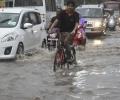
The southwest monsoon over the country is likely to be normal in July, the India Meteorological Department (IMD) said on Thursday in its forecast for the month.
